Monday, December 16, 2013

Review of The Lost Clue

Lost Clue
Mrs. O.F. Walton’s narrative is beautiful, enjoyable and intriguing! The hero of this story, Kenneth Fortesque, is living a life that contradicts itself; he is both the son of an ungentlemanly miner and a well-educated heir to a large estate who may circulate in - even marry into - some of the best families in England. Who is he really? When his father suddenly falls ill, Kenneth returns home immediately to receive an important message from him but arrives too late! Foiled by an irascible housekeeper and suddenly penniless, Kenneth must wait, pray, and toil to find the missing letter his father left for him.

Of course, there are other players in this mystery. One particular set are the Douglas family. Kenneth is sent to them as the bearer of very bad news. But, not willing to shoot the messenger, they become true friends in his lonely new world. In fact, through their own struggles and adventures they help to solve the mystery.

This is, to me, a wonderful book for young men and women (older ones too, of course!) There are lessons and encouragement for both. I found very few moral errors in the book. Rather than create “perfect” characters, the author simply makes sure that every character flaw is well addressed. I hope you will find the same and will enjoy the hunt for the lost clue.

P.S. As a side note about the author I would like to point out that her usage of her husband’s initials (O.F. stands for Octavius Frank) was customary and proper - a mere convention - suitable for almost any occasion.

Title: The Lost Clue
Author: Mrs. O.F. Walton
Setting: England
Main Character: Capt. Kenneth Fortesque
First Printed: 1907
This Printing: May 2011 (5th Edition)
Pub: Lamplighter Publishing
Series: Rare Collector Series
ISBN: 1-58474-135-X
ISBN13: 978-1-58474-135-0
Chapters: 28
Pages: 287
Pages/Chapter: ~ 10


Saturday, November 23, 2013

Review of Brave Deeds of Revolutionary Soldiers

This is a treasure I’ve found in my hunt for good old books. Printed in 1913, Brave Deeds of Revolutionary Soldiers has a somewhat moralistic view and is not overtly Christian; however, it contains great stories about brave heroes of the War for Independence. 

In fact, only a few of the twelve stories are ones the average reader would be familiar with - have you ever heard of John Champe, the loyal deserter? This book is addressed to and was definitely written for boys, but I think that anyone studying the Revolution would enjoy it. It will help to flesh out some of the bone-dry facts of history with vivid recounts of the winter in Valley Forge, Clark in Kaskaskia, Nathan Hale’s capture, and other events. Best of all, it is well written and neither too childish nor flowery.

I would caution that some of the characters harbor a strong desire for revenge or are motivated by hate. These are certainly not desirable traits, but their presence might make for a good lesson. Other than that (and the above mentioned moralism), there’s nothing else to bring against this grand old book. The only question left then is “can it be found?” 

Apparently, yes! Amazon.com has a paperback version that appears to be unedited as it was a “culturally important work.”

Title: Brave Deeds of Revolutionary Soldiers
Author: Robert B. Duncan
Setting: The American Colonies, War for Independence
Main Character: (Several)
First Printed: 1913
This Printing: August, 1913 
Pub: George W. Jacobs & Co.
Series: Brave Deeds Series
Chapters: 12
Pages: 292 (Hardcover)
Pages/Chapter: ~ 24

Price: $23.37 and up for the paperback on Amazon
Publisher: Nabu Press (May 13, 2010)
ISBN-10: 1149297212
ISBN-13: 978-1149297216


    P.S. Since there is a sister book (Brave Deeds of American Sailors), the treasure hunt continues!

Saturday, October 5, 2013

A Dream Come True

Once there was a little girl who was fascinated with how the brain works. She was so fascinated in fact that she decided she wanted to be a brain surgeon someday.

As a forward-thinking ten-year-old, she decided to quiz her physician father about medical school. What was it like? What kinds of things would she have to study? How could she prepare for it? And, most importantly, how long would it take?

The answer to the last question shocked her ten-year-old self. It seemed like forever! I can’t wait that long to actually do this, she thought. What about having a family? No wonder not many people become brain surgeons...

This revelation sparked a new thread of discussion. “Daddy, there has to be a faster way to do school,” she would say. “I mean, why do we have to go to college after high school anyway? Don’t they just teach a lot of the same stuff over again? After all, look at the Founding Fathers.”

And so plans began forming of how to save time. Knock off a year here. Save two years there. Surely there had to be a way to do education faster and better. 

Well, as this girl grew up, she realized that she really wasn’t built to be a brain surgeon. (More on that later.) She realized that what she really wanted to do was help people and serve the Lord. (And maybe do some really outlandishly awesome science experiments with her children someday.) So she took all of that passion and poured it into a few others areas. But, as the brain surgeon idea faded away, the dream of doing college faster stuck with her.

Even as she and her parents toured four-year colleges, she kept thinking that someday there had to be something different. At one of those colleges, she purchased A Different Kind of Teacher by John Taylor Gatto, and read it. That book convinced her even more that something had to change in higher education.

Meanwhile, down in the great state of Texas a few other people were thinking the same thing. In a couple of years, their paths would intersect via tapes, books and CDs, kind friends and a very special conference. What was this new Accelerated Distance Learning thing really about? Maybe just maybe...

Fast forward. As a nineteen-year-old (one month before her 20th birthday), this girl received her fully-accredited bachelor’s degree. Clearly, it took heaps of work, but thanks to the foresight and help of CollegePlus and Thomas Edison State College, she had finished her BA in two years, joining the ranks of other CollegePlus and TESC students who have proved that it can be done. She recognized it as a God-given gift. It was a dream come true. Now she could step forward to live out other bigger dreams.

Of course, I was that ten-year-old girl dreaming big, the sixteen-year-old girl reading that book and the nineteen-year-old girl receiving her diploma. This subplot of my life reminds me that God can bring dreams to fruition. Not often in the way we expect. Not always in the way we think we want. But He cares. He gives us dreams. And He is the One Who can make them come true.


Wednesday, September 11, 2013

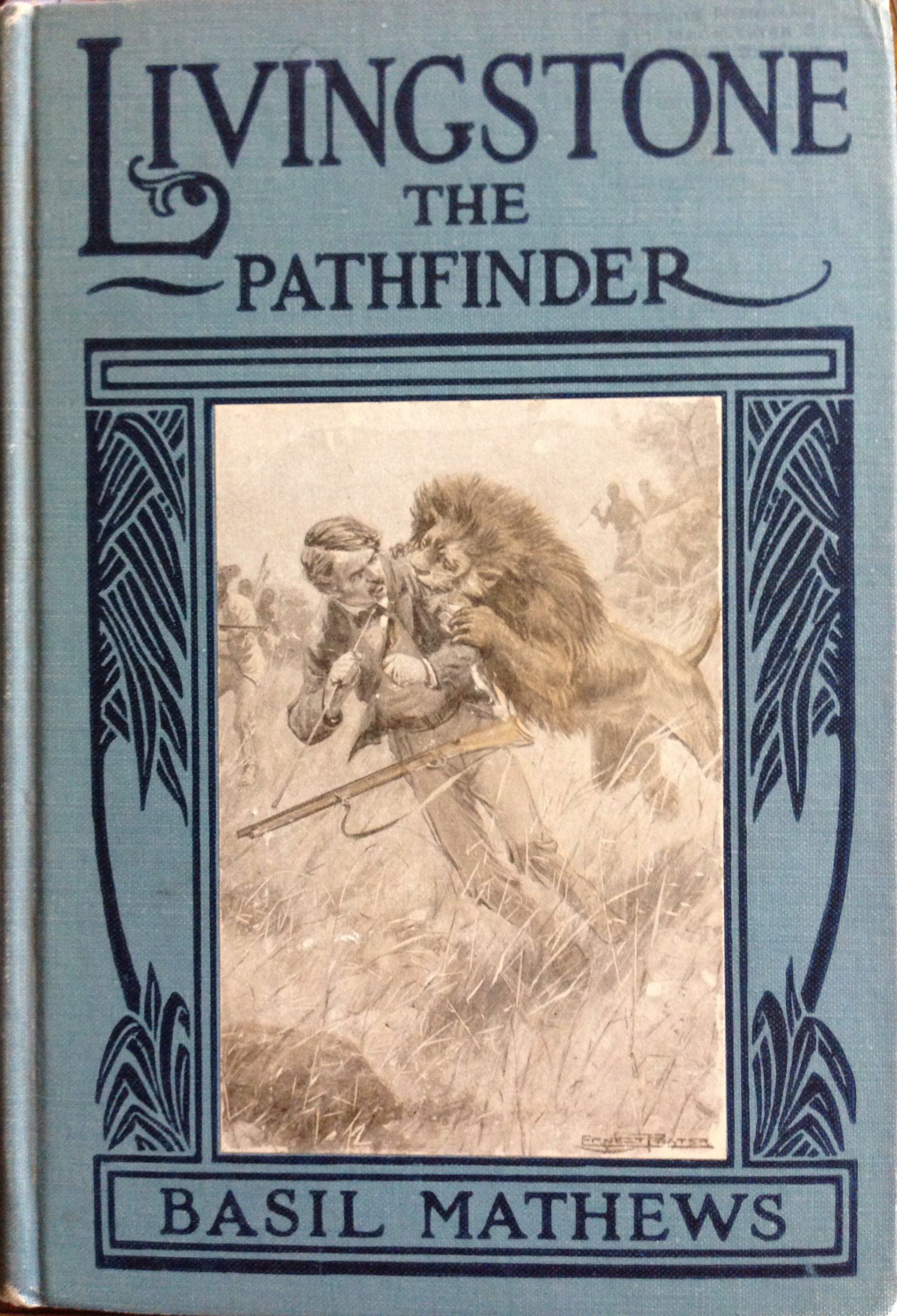
Review of The Pathfinder


“‘It is impossible,’ replied the Portuguese and the natives, explaining that the river was choked with duckweed and that the natives would shoot them with poisoned arrows. Livingstone, however, spent his whole life doing things that men said were impossible...”
            ~David Livingstone: The Pathfinder by Basil Matthews1

What praise to be given! Missionary Dr. David Livingstone really did spend his life doing what men said was impossible. Who would think it possible for a young boy working in a cotton mill to one day be a doctor? Who would think it possible for that same Scottish lad to one day traverse the African wilds - not to mention map the interior, survive danger and disease, discover water where there was thought to be dessert, and disciple tribes considered unredeemable? Who would imagine that one lone man could document the horrors of the African slave trade and wake up a sleeping world? By the end of his life in 1873, Livingstone surely had experienced the truth of Matthew 19:26, “With man this is impossible, but with God all things are possible.” (ESV)

For me, this was the theme of a biography of Livingstone that was originally written in 1912, David Livingstone: The Pathfinder. I remembered the book on our shelves when I discovered that this year is the 200th anniversary of his birth, and, in just a few pages, I was fascinated. Basil Matthews relates the story in a narrative tone that draws the reader in, gives useful background information, and makes Livingstone, along with his trials and triumphs, come alive. That’s a recipe for a great biography, I’d say.

Having finished the book, there are several points that stand out to me.
  • As already mentioned, Livingstone dared to attempt the impossible. Sometimes he failed. Oftentimes, by God’s grace, he succeeded. How often are we kept from doing what God wants because others deem it impossible?
  • He discovered the wonder of God’s creation. “...Livingstone enjoyed watching  all the animals that roamed over the country, from the elephant and fierce black rhinoceros to the tiniest insects all happy at their work....Everywhere he found something to wonder over.”2   
  • He painstakingly documented his findings to make them useful to others, showing that his vision went beyond himself.
  • He didn’t give up even when he faced deep pain. Like many missionaries, Livingstone faced intense loneliness, the death of loved ones such as his wife Mary, the disappointment of false friends, and disease that nearly crippled him. He knew what it was to suffer. Yet his God-given mission(s) drove him on, and he finished the race because his hope was in God.

I hope today’s missionaries get to spend significant time studying biographies of yesterday’s missionaries because they give us such perspective. On one hand, we might realize that our struggles are not so hard to bear after all. Or perhaps we will be comforted by increased knowledge of the “cloud of witnesses” (Hebrews 12:1) and by seeing how God has upheld others in His “righteous right hand” (Isaiah 41:10).

___________________
1 Matthews, Basil: David Livingstone: The Pathfinder (Pensecola: A Beka, 2000, originally 1912),  pg. 117-118

2 Ibid., 106

Thursday, August 29, 2013

The Mission Field Under Our Noses

Seven children from the same family were being baptized. One by one they shared their testimonies. After the oldest, all the rest sounded quite similar. Part of each sound snippet included something like, “I saw my sister become a Christian, and I wanted to be a Christian, too.”

As I listened, I realized what an impact this eldest girl had had on her family. Clearly, salvation is the work of the Holy Spirit (Ephesians 2:1-9 and Philippians 2:13) and our understanding of it shouldn’t be based solely on wanting what someone else has or a sentimental idea of being like “Big Sister”. That is definitely something to be careful of, but the main thought that struck me at the time was how precious this scene was. It pressed the question, “Is each of us living in such a way as a sister that our younger siblings (or anyone else) would say, “Wow! If that’s Christianity. I want in.”  

Such a thought leads, of course, to a personal evaluation of ourselves before the Lord compared to Christ and His Word. However, my main point goes more with the sister part of the revelation. God used one girl (at least in part) to bring six souls to Him - six souls right under her nose. Did this girl ever think these siblings were her mission field?

As a girl who has lived seven years of her life overseas doing “foreign missions work” with her family - and loving much of it, I might add - I’ve realized that I often used to think that real missionary endeavors only happen in faraway places. As I’ve grown up and talked with friends, I think this is actually a rather common idea. 

And let’s face it, it’s comfortable to think that way. If we can’t do “that sort of thing” right where we are, we’re off the hook! Furthermore, I’ll be the first to admit, that it would be much cooler to go around telling people that I’m doing such-and-such in a tropical country with people who are desperately poor (Note: There are people who are desperately rich in most third-world countries, too.) than it would be to say that I’m teaching a four-year-old to read, helping Grandma shop for groceries, learning from Mom as she teaches Josie how to cook, trying to be a good example of Biblical womanhood for my little sisters and encouraging my five-year-old brother to be a godly man by going on adventures of discovery and dominion in the woods behind my house all while keeping up with the dishes, laundry and the gardens so that our house can be at least a little ready for surprise guests - all those “strangers” we’re supposed to welcome. 

But, truly, when we look at what real missions work is... 
  • presenting the message of salvation and teaching others to follow all of Christ’s commands (Matthew 28:19-20), 
  • living in such a way that our God-directed works and our Christ-sourced love make a watching world wonder (Matthew 5:16 and John 13:35) 
  • making the most of every opportunity (Ephesians 5:16 and Colossians 4:5)
  • and caring for “the least of these” (Matthew 25) 

...are these “little things” not just as important on the homefront of suburban America  as equivalent actions would be among unreached tribes along the Amazon? And, really, can anyone know how - or have the opportunity - to love your siblings better than you?

One of my favorite missionary stories is that of John G. Paton, Scottish missionary to the South Seas. While there are many gripping escapades in his adventures, two points still grip me five years after reading it. Firstly, before he set sail for the New Hebrides, Paton ministered among his own Scotsmen who happened to be in just as much need of God’s Word as the cannibals among whom he would later live. He was a missionary right where he was. Later, he realized that this time prepared him for the overseas work. The chronicle of his adventure is bound up in Missionary Patriarch: The True Story of John G. Paton, written by John himself and edited by his brother James who was twenty years younger! If these two brothers, so far apart in years, had not combined forces the Church could have lost the story of one member of her “cloud of witnesses”. This may be reading between the lines, but in their massive literary joint effort, I think we can see that fruit of brothers who cared about each other deeply.

Another example that comes to mind is Rachel Saint. As her story is shared in Chapter 2 of “Saint: The Story of Nate Saint, Missionary Pilot”, we get to see that she took time to invest in her younger brother Nate’s life. She encouraged him to seek the Lord, and when Nate was in the hospital with osteomyelitis, Rachel talked with him about death and what it means for a Christian. All of this took place before he stood among the heroes of the faith, even while he was still a rambunctious boy. Have you ever wondered what God might have in store for your siblings and how He might want to use you to prepare them for it?


So, girls, while we do seek “all the nations”, let’s not forget the people right around us - the mission field under our noses. 

Thursday, August 22, 2013

Review of Saved at Sea: A Lighthouse Story

Saved at Sea
Another wonderful book! Saved at Sea by Mrs. Walton is a sweet story about a young boy, Alick, and his grandfather who live with one other family on an island off the coast of England. Grandfather’s job is to care for the lighthouse and keep the lamps lit, with the help of Jem, the father of the other family. Alick tells of the misfortunes and blessings that come to that lonely little island when he was about twelve years old. The story starts, as they so often do when set near the sea, with a terrible storm and a shipwreck. Will his father ever return? Will someone try to take their little “sunbeam” away? And what ever does it mean to “build on the Rock?”

Saved at Sea is a somewhat unusual story because it lacks a human antagonist. That allows it to be a sweeter story than most since there are no nasty characters. However, because this book includes two instances of parents dying tragically, it might not be suitable for some children. It seems to have been written for children, though, because the message is clear, the wording relatively simple (without being boring to adults), and it is centered around a twelve-year-old. Besides that, it is quite short. I found it to be a very quick read because the plot and the short chapters encouraged me to “read just one more!”  The next time I want a cheery little story I think I will probably return to Saved at Sea.

Title: Saved at Sea: A Lighthouse Story
Author: Mrs. O.F. Walton
Setting: England
Main Character: Alick Fergusson
First Printed: 1879
This Printing: 2007
Pub: Lamplighter Publishing
Series: Rare Collector’s Series
ISBN: 1-58474-131-7
Chapters: 12
Pages: 119
Pages/Chapter: ~ 10
Additional Stories: None


Saturday, July 20, 2013

Review of Jack the Conqueror

Jack the Conqueror, or Difficulties Overcome
This sharp looking little book from the Lamplighter Collection ranks among my favorites.  It is short, sweet and deals with real-life problems in real-life ways. It does tend to take a  “God helps those who help themselves” angle, so remember that that idea is not really the whole picture.

Nevertheless, just as Nehemiah had to physically rebuild the wall around Jerusalem, Jack has to conquer his problems in practical ways. You see, our ten-year-old hero lives with his aunt who is poor and doesn’t care what he does or where he goes so long as he doesn’t cost her anything. He can wander around town, climb trees, run in the fields, and be as dirty as he likes all day long. But his clothes are very ragged, he doesn’t get much to eat, and he has no one to teach him. So, Jack, after finding out that this is not good, must “resolve well and persevere” alone. 

He’s not truly alone for long though. His willingness to try things soon wins him friends. With their help and Providence, Jack not only learns to be clean, work diligently, and read but more also. It really is fun to read about his adventures! Perhaps one of the best parts is how he manages to have his one and only set of clothes mended! His patience and diligence and the kind wisdom of his friends form an impressive model for children and adults to keep in mind as they conquer their own challenges. 


Title: Jack the Conqueror
Author: Mrs. C.E. Bowen
Setting: Bushgrove, England
Main Character: Jack Harold
First Printed: 1869
This Printing: September 2011
Publisher: Lamplighter Publishing
ISBN: 1-58474-187-2
ISBN13: 978-1-58474-187-9
Chapters: 15
Pages: 127
Pages/Chapter: ~ 8


Wednesday, July 17, 2013

Review of Jessica’s First Prayer

Jessica's First Prayer
To continue with our series on missions, here is a review of a book that I think presents a poignant picture of biblical missionary activity. Even though the story is set in nineteenth-century London, the principals hold true today. The following thoughts are taken from my “Book Journal”. 

Yesterday, I started reading one of Lamplighter’s books that  came in the mail with our September package. Today I finished it! Yes, Jessica’s First Prayer by Hesba Stretton is a small book (less than 100 pages), but it also is such a sweet story that this afternoon I had to get to the end.

Little large-eyed Jessica has no one who cares for her in all of London until one day 
when a grave man begrudgingly gives her a 
cup of coffee from his stand. Her friendship will then lead her to a church where her bare feet are eventually led not only down to the pulpit but also down the Way of her Savior. Jessica’s sweet confidence that the Lord will hear her prayers “for Jesus’ sake” transforms the heart of her friend.

Firstly, I like how Hesba Stretton deals with the hard reality of mid-nineteenth century London life yet still keeps the story sweet. I would feel all right reading this story to an eight-year-old. Secondly, I love the minister. He is so gentle and kind to his two daughters and to Jessica. Most importantly, he sees beyond Jessica’s raggedness - he sees her as one of Christ’s lambs to be fed. Also, he actively seeks to help her not only by explaining God’s truth, but also helping to meet her physical needs. He is a good example for me in all these ways and seemed like a minister I would like to know.

Lastly, on a more technical note, I love how Lamplighter has put in footnotes for the Scripture references. It is so nice to be able to see what passage is being referred to, and I am really trying to pay attention since one of my goals is to memorize more verses!


Friday, July 12, 2013

Shared Dreams

Have you ever had a friend who shared your deepest dreams? By dreams, I don’t mean the asleep kind of dreams or the I-would-like-to-have-a-red-Mustang-convertible-someday kind of dreams (although those certainly can be good too); I mean the God-given, I’d-be-willing-to-give-my-life-to-this kind of dreams. Have you ever had a friend who shared those dreams? A friend whose heart beats with yours at certain (whether small or large) ideas of discovery, dominion and discipleship? What a blessing a friend like that is!

I’m thankful to say that I have at least one friend like that. My sister. And, oh, the adventures we have had!

A fairly recent adventure was attending the Illinois Christian Home Educators Convention. One of the wonderful things about ICHE is the fabulous resources waiting at one’s fingertips. This year we came across MP3 CDs of specific Stories of Great Christians, biographies of Christian men and women dramatized for radio by the Moody Broadcasting Network. In our area, these stories still air on the radio daily, and we have enjoyed them, so we couldn’t pass up the opportunity to purchase some for our personal library.

So far, my favorite of the CDs we purchased is “Saint: The Story of Nate Saint, Missionary Pilot”. While the story obviously focuses on Nate’s life from childhood to the gates of eternity, Marjorie Saint’s life is, of course, also woven in. Knowing honestly very little about Marjorie beforehand, I zoomed in on her part of the drama.

Imagine you are a young wife. You have just arrived in Shell-Mera, Ecuador, to see your new house (the mission station) that your husband has been working on. As he gives you a tour, certain things become obvious: your water will come from the rain barrel, the walls don’t go all the way up to the ceiling so that fresh air can come in (even though bugs will probably come in as well) and so much more. You can tell that your husband is nervous, thinking you might not like roughing it like this. How will you respond?

In the radio drama, Marjorie Saint responds like this, “I think I’m going to love it here. I’ve been sharing your dream for pioneer missionary aviation for as long as I’ve known you. It’s my dream now, too. It’s become a part of me. And if you think you can hog all the pioneering to yourself, you’ve got another thing coming!” 1

Remarkable, right? Marjorie responds with grace and gusto because God had given her the same dream as her husband’s. She owns it for herself and can’t wait to get into it as much as he is. Beautiful, isn’t it? That’s what sharing God-given dreams looks like. That’s why we hope and pray to share dreams with our dearest friends (and especially the man God might have for each of us) - so the watching world can stop and say, “That’s beautiful! God must have done a great thing here.

If you want to see pictures or learn more about Nate Saint, you can start here: http://www.maf.org/about/history/nate-saint#.UeCEnRacN6E 
________________________
1 “Saint: The Story of Nate Saint, Missionary Pilot” Stories of Great Christians (Moody Broadcasting Network, Chicago: Chapter 11 8:03)


Wednesday, July 3, 2013

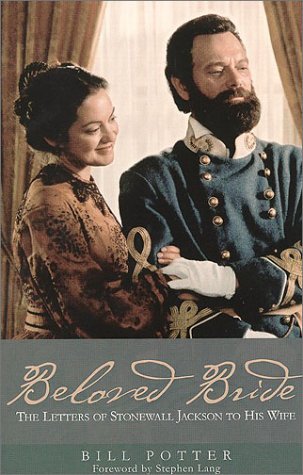
Beloved Bride: The Letters of Stonewall Jackson to His Wife


This week thousands of Americans are remembering a monumental battle that took place 150 years ago in Pennsylvania - the Battle of Gettysburg. Even though “Stonewall” Jackson had passed away in May of 1863 (before Gettysburg) we think remembering him is a fitting way to mark this anniversary.

Through my studies of history, I have discovered how important it is to hunt up original sources—to study people by looking at their own words. By looking at a person’s own words (in context) I can learn what he himself truly thought, not what some biographer or historian tells me he thought. This is one of the reasons that I love 
studying historic figures via their personal letters.

For me, this particular collection of “Stonewall” Jackson’s letters to his wife proved particularly sweet, and I think a few of you might enjoy it as well. Yes, he had flaws—sometimes glaring ones—like the rest of us, but I do think the Lord enabled him to do a few things very well and that we can learn from those things. Besides, let’s admit that a great many of us won’t pass up the opportunity to peak into some God-honoring love letters! And, if you grew up a dedicated Union girl as I did, you might see a new side to the men in grey as well. 

As I read Beloved Bride (and watched both Still Standing: The Stonewall Jackson Story and Gods and Generals) I developed a great appreciation for a man of whom I used to know very little—Thomas J. “Stonewall” Jackson. Now both Jackson and his wife to whom he wrote, Mary Anna Morrison Jackson, stand amongst my historical heroes. I discovered that Jackson was not only a brilliant (blessed) Confederate general but also a loving and tender husband, a loyal friend, a principled and caring leader, a man who loved children, a thoughtful and delightfully doting father, and—foremostly— a steadfast, ever-growing Christian with a great heart for glorifying his Savior and leading other men to the life of forgiveness of sins and to sanctification. Now I understand why someone might want to name his son after this man.

Another part of this book that I like is Mr. William Potter’s sections where he gives account of the historical events surrounding the letters. When I read it, I can hear Mr. Potter saying it in his knowledgeable and kindly way just as it’s written. It’s like being on a Faith & Freedom Tour of Jackson’s life.  
    
Favorite Quotes
“Continue to pray for me that I may live to glorify God more and more, by serving Him and our country.”  ~November 9, 1861, pg. 73
    
“Time forbids a longer letter, but it does not forbid my loving my esposa’.”  ~May 26, 1862, pg. 90
    
“If God be for us, who can be against us?  That He will still be with us and give us victory until our independence shall be established and that He will make our nation that people whose God is the Lord is my earnest and oft-repeated prayer. While we attach so much importance to being free from temporal bondage, we must attach far more to being free from the bondage of sin.”   ~August 11, 1862, pg. 103-04
    
“I hope to have the privilege of joining in prayer for peace at the time you name, and trust that all our Christian people will; but peace should not be the chief object of prayer in our country.  It should aim more especially to implore God’s forgiveness of our sins and make our people a holy people.  If we are but His, all things shall work together for the good of our country, and no good thing will He withhold from it.”  ~November 20, 1862, pg. 113


Tuesday, June 25, 2013

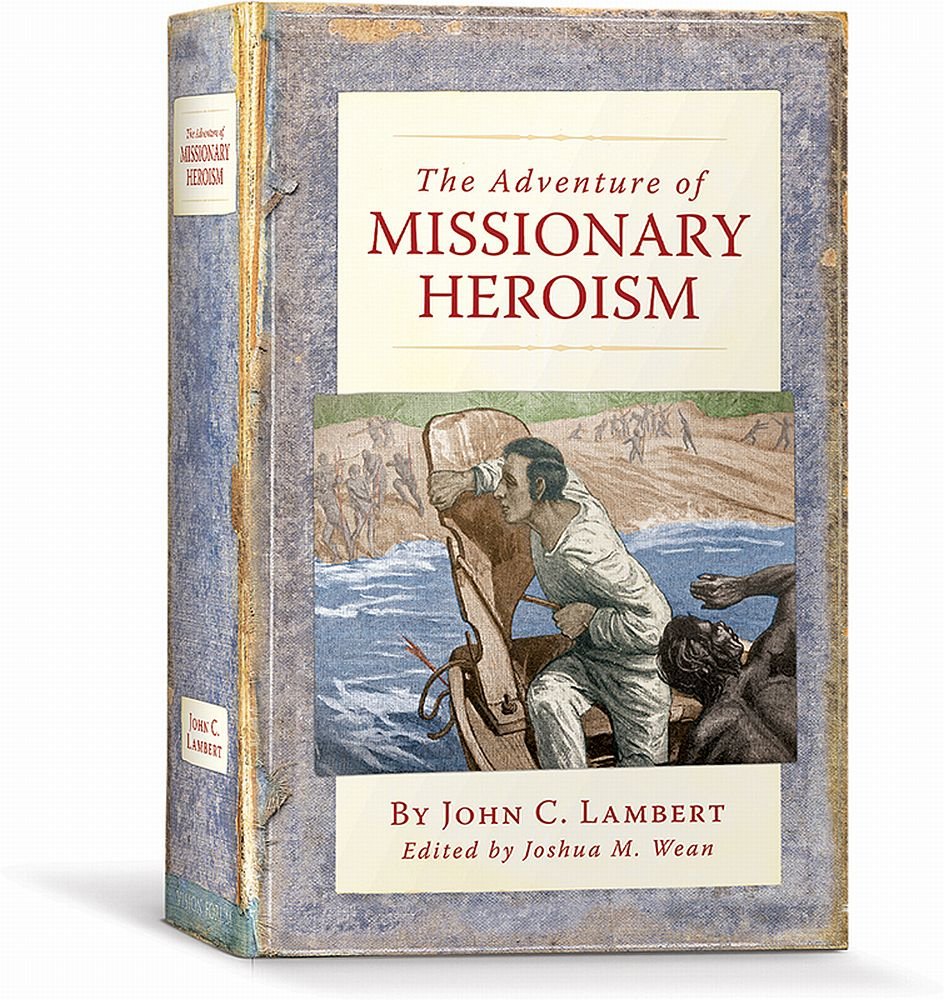
The Adventures of Missionary Heroism

Welcome to tales of adrenaline-pumping adventures covering the globe! Witness close-call escapes, fearless devotion, sacrificial love and dealings with fierce creatures all from the safety of your own chair. Even better, these are real-life stories. 

Within the pages of The Adventures of Missionary Heroism, you will discover men and women who risked all for the sake of Christ and taking His love and truth to others who had never before heard the Gospel. Set in the desserts of Mongolia, the snows of Canada, the plains of America’s West, the remote regions of South America or the wilds of the South Pacific, each story is unique and exciting. The author John C. Lambert took special care to document the legacies of lesser-known missionaries who are often overlooked today. Thus, even the avid student can 
learn something new! In addition, the editor Joshua M. Wean provides a short summary of each missionary’s life and a background of the mission field, making this volume a truly useful tool. Readers of IndustriousDaughters may especially appreciate the story of Kapiolani, an industrious Hawaiian chieftainess, who went to great lengths to show the power of the Gospel over the Goddess of the Volcano.

Here is a list of the missionaries covered.
  • James Gilmour
  • Dr. Jacob Chamberlain
  • Joseph Hardy Neesima
  • Dr. George Leslie Mackay
  • Dr. A. Macdonald Westwater
  • Alexander Mackay
  • James Hannington
  • Francois Coillard
  • Frederick Stanley Arnot
  • Albert B. Lloyd
  • John Horden
  • James Evans
  • Stephen and Mary Riggs
  • William Henry Brett
  • Captain Allen Gardiner
  • John Coleridge Patteson
  • James Chalmers
  • James and Mary Calvert
  • John G. Paton
  • Kapiolani


With this post, we are beginning a new series on missions and missionary activity. We hope you enjoy and would love to hear from you!


Tuesday, June 18, 2013

Five Years Ago...

Astonishingly, it has been five years and one month since we graduated from high school in May 2008. So much has happened since then! On that memorable day we were blessed to have over 150 friends gather in our yard to share in the celebration. As part of the event, the two of us teamed up to deliver a speech. In honor of the day, we’ve decided to share a portion of that speech with you. 


Graduation Speech
Gratitude for the Past & Hope for the Future

Firstly, we would like to thank all of you for being with us today.  It is such a joy for us to be able to share this celebration with you.

For our family, this is not only a celebration of our high school graduation, but of twelve years of successful homeschooling.  

Especially during our high school years, when we would meet someone, one of the first questions they would ask us was, “Where do you go to school?”  Of course, we would say something like, “Oh, we’re homeschooled,” and to save them the trouble of asking the question that invariably would follow, I would usually add, “And we like it”.  However, a few months ago I was thinking about these conversations and realized that this wasn’t really true.  We don’t “like” homeschooling; We LOVE homeschooling!    

As we look back on our twelve years of home education, we recognize that two of the greatest gifts we have gleaned from these years are gratitude for the past and hope for the future.

Above all, we are very thankful to God for these twelve years because it is He who enabled us to begin, to continue, and to finish our homeschooling adventure....  

And, God has given us grandparents—a great gift.  We have been so very blessed to have not only our biological grandparents but also “adopted” grandparents like Mr. and Mrs. Chase, whom we would like to thank for all that they have done for our family and for being such godly examples for us to look to.  

Of course, we also want to thank our “real” grandparents, firstly, Kenneth and Alice Hammer for all they have done for us, for telling us their stories and for sharing their wisdom and their pies that you will get to eat in a little bit.  We are proud of our grandfather served in the United States Air Force during WWII and of our Grandma who gallantly supported the “soldier boys” on the homefront.  We thank them for their sacrifices as they kept in mind not only their own future but the future of their nation.  We are also grateful to them for all they did for their son Steven—our father—for the trips through the States and overseas and for the economics lessons at the dinner table and all the other good things they did that laid a foundation for our family.  
    
Secondly, we want to thank Dan and Ruth Greenwood for all they have done for us, for sharing their stories, for moving out of their home and keeping our house while we were in Guatemala and for making cleaning seem fun. We especially want to thank Grandpa for doing something that few fathers did in the 1960s: He would sit his children down and explain to them the importance of family, “The way of the family is the way of nation,” he would say.  “We must be a strong family.”  And, we especially want to thank Grandma for making a foundational point to our mother.  When Mom would come home from public high school and ask, “Mom, is what everyone is saying true?  Does a woman have to have a career, wealth, and prestige to be fulfilled?” Grandma would reply, “Well, I’ve always believed that the best thing a woman can do is to raise a good family.”  Even though these may seem like insignificant events, these moments are priceless to our mother and to us. ...Our homeschooling adventure began in a large part due to the lessons Grandma and Grandpa taught our mother, and we thank them.

Now we come to the two people who have been most instrumental in our education, our godly mother and father.  Next to God it is to them that we owe any success we have had....We are grateful that our parents had the courage to step completely into something they had rarely seen done before.  They had few examples before them, but they were willing to try it.  

And, thus, year by year, our family continued homeschooling.  Now as we look back on these twelve years, we do see things that we would change if we did it again, but we have absolutely no regrets that we chose home education over all the options offered to us. In fact, our family is far more convinced about homeschooling now than we have ever been before.

We have successfully home educated in four different homes, in two different countries, at times where we hardly ever cracked the cover of a textbook and at times when we used nothing but textbooks.  One thing about the Hammer family that has helped us home educate is that we love books.  We still laugh over the fact that at the first homeschooling conference that our parents went to, our father purchased the complete World Book Encyclopedia set for his daughters’ use.  Mom was skeptical because we were only three years old, but she also has been known to buy books ahead of time.  We owe a lot to our parents for instilling in us a love for books by reading to us every night....

Well, there you go! That’s a snapshot of a special moment of our lives. We’re glad to say that we still love home education - and that if we were going to do this speech over again, we might be able to write it better!

Tuesday, May 28, 2013

MOMENTOUS OCCASIONS: Celebrations Of The Moment

Sometimes it’s easy to get so focused on celebrating the obviously big things - national events, life-changing experiences - that we might forget the value of the little moments.

We think it’s important to celebrate the little moments because in some seasons we may not have the opportunity to commemorate grand occasions with lots of preparation. (Although we very well could have impromptu parties to celebrate these moments!) As someone once said, “Sometimes life is full of awe, and sometimes it’s just awful.”1 Those are the times when we need to remember the whispers of a moment.

What kind of bright moments are we thinking of? When Baby claps and jumps as his aunties play their violins. The sight of a glorious sunset as you’re driving down the road. The instant when a little boy gives you a dandelion like it’s a dozen roses. A warm summer evening when you and your sister sit on rocks and enjoy ice cream cones filled with scoops of Blue Moon - her favorite flavor back when she was five. 

We also think of celebrating the “small” spiritual victories because we know how hard fought those often are. Like when a group of little boys joyfully lets a long line of little girls go in the door first. Or when a four-year-old girl comes to you and says, “Is there any way I can be helpful?” or a ten-year-old girl asks for prayer that she will have a good relationship with her brothers and not tell them what to do too much. Or when you see the brightest, most popular little boy of a group befriending and helping a fellow who struggles. Maybe it’s watching an old lady keep up a cheery attitude and good sense of humor that makes everyone smile. Perhaps it’s the time you watch one of your young friends introduce herself to a WWII vet and thank him for his service to her country.

Celebrations of the moment also make me think of Longfellow’s poem “The Children’s Hour.”
Between the dusk and the daylight,
When the night is beginning to lower,
Comes a pause in the day’s occupations, 
That is known as the Children’s Hour....

In his poem, Longfellow takes a brief, potentially routine time and commemorates it. He recognizes this hour of a father with his little daughters as something precious and by writing about it gives it weight. He captures the joy, love and merriment of something we might otherwise miss in our daily lives. This is celebrating the moment.

Thankfully, we don’t all have to write poems in honor of our “momentous occasions”. One way we can recognize these moments is to communicate how we were blessed. “Oh, thank you! I just love flowers!” - even if it’s “just” a dandelion - or “Sofia, thank you for offering to help me. That was a big encouragement today.” or “I saw how you were trying to be kind to so-and-so. That really cheered me up. Even more than that, it was a beautiful testimony for the Lord.” Besides commemorating that fleeting minute, these kind of statements can mean the world to the listeners.

May we choose to rejoice in the moments just as much as in the events. Remember them. Give thanks to the Lord for them. And maybe we’ll find out that these little moments are often the big ones after all.
_________________________
1 Finnian Jones in “The Basket of Flowers” Lamplighter Radio Theatre


Friday, May 24, 2013

Review of the White Knights

White Knights, The
The White Knights is a jolly tale of boyhood adventures whose lessons will reach a heart of any age. Written for boys, this book teaches many values - from kindness to punctuality - but all of them fall under the standard of following the Captain of our hearts. 

Three boys on holiday in a sleepy English town ride out, like knights of old, to “redress human wrongs”*. Unlike knights in shining armor, Sir Horace, Sir Cyril, and Sir Percy don’t ride horses or fight dragons - they don’t even have bicycles - but, as they learn from their advisor, Pastor Gilbert, it’s “the spirit of the thing” and not the horse and armor that make a knight. 

I would recommend that parents make sure that their child is ready to read this book. Oh, it’s a wonderful, fast read and the vocabulary will be great to stretch anyone’s knowledge of the dictionary, but there are issues that could bother some children. For example, Horace’s mother becomes very ill and, though it’s not a big deal in the story, it could strike a tender spot. Issues like boarding school and parents leaving their kids with relatives to go work as missionaries in China might also be hard for kids to grapple with. (It is pretty clear from the story that it would be better for the parents to be with their children.) 

Are there any reasons to absolutely not read this book? Not that I know of. Would I recommend this book to almost anyone? Absolutely. Oh, I doubt that it’s something that non-Christians would understand, but it could be appropriate in some cases.

The airy, frank joy in this book was refreshing. The honest boyishness of our three heroes is thrilling. The gentle, wise manliness of Pastor Gilbert is admirable. Each picture a paragraph brings to mind is beautiful. I think I shall return to this book again and again - for lessons and encouragement. 

P.S. As I began to implement some things I had learned, I was reminded that when a person renews a fight, the enemy starts fighting harder too. If you find the same discouraging result; remember - battle scars are marks of battles won; not lost.


Title: The White Knights
Author: W.E. Cule
Setting: Eastgate, England
Main Character: Horace Mackintosh
First Printed: 1919
This Printing: April 2011
Pub: Lamplighter Publishing
Series: Rare Collector’s Series
ISBN: 1-58474-104-X
ISBN13: 978-1-58474-104-6
Chapters: 8
Pages: 185
Pages/Chapter: ~ 23


*Part of the oath sworn by knights of the round table; A Tennyson Dictionary, p 60 (Haskell House Pub., previewed on books.google.com 11/19/12)


Tuesday, May 21, 2013

Days of Remembrance

Lord God of Hosts, be with us yet,
Last we forget - lest we forget!
~from “Recessional” by Rudyard Kipling

Just the other night, our family gathered and opened up one of our photo books. This was part of our way to remember where we were three years ago - on a very special trip. As we studied the photos, read the notes, laughed over funny memories and sighed  with wistful thoughts, we remembered all that the Lord taught us back then and had the opportunity to realize how what He did then has impacted our lives ever since. Those moments of reflection gave us new hope for the future.

That is the point of “days of remembrance”: taking the time to look back at what the Lord has done so that we can understand better what He is doing and trust Him with what He will do. Sometimes days of remembrance are simple family moments like us looking through our photo book. Sometimes they are grand celebrations. Let’s take a look at some of them.

SIMPLE GATHERINGS
So often in life it is really the simple moments that change the course of our lives. For our family, many of our days of remembrance are inspired by our travels. “Remember where we were three years ago today? Let’s do such and such in honor of the day!” “Can you believe it has been nine years since we moved back from Guatemala? Let’s celebrate by...” 

New Year’s Eve is also a lovely time to declare as a day of remembrance. Over the past several New Year’s Eves, we have tried to carve out at least a bit of time to sit down with pens and paper (and often a yummy snack) and go through the year. “Do you remember what happened in April?” “Wasn’t it amazing how such and such happened?” “Remember how we didn’t know if we would make it through such and such? God was so faithful!” “What was your favorite part of the year?” “What lessons did we learn?” “I hope we never do X again!” All of those questions and thoughts help us to remember, to catch at least glimpses of God’s hand and to have a better idea of where we are heading in the coming year.

INDIVIDUAL PROVIDENCES
Another great time for days of remembrance is birthdays. A birthday can be a day of telling stories of God’s providence in our lives, of remembering what He has brought us through, of delighting in His care and creativity in crafting each individual life. But for the grace of God, none of us would even be breathing much less all the other things we are blessed to enjoy and do.

One of our favorite birthday memories is of Grandpa Hammer’s 93rd birthday. The two of us girls planned a little WWII-style musical show for him as a surprise and practiced for weeks in advance. When the day came, we dressed up in WWII/50s styles dresses (actually some dresses of our mother’s from years ago!) and went to the nursing home where Grandpa was. Our program included patriotic numbers, WWII favorites, cherished hymns and beloved ballads since we had tried to fit in Grandpa’s favorites. Thanks to the other residents who joined in, it ended up being quite the little event - not only a celebration of Grandpa but also a time to remember the WWII era that had such an impact on his life.

HISTORIC EVENTS
In our experience, celebrations of historic events have been rather grand affairs, but they don’t have to be. For example, on April 18th, we - especially I (Kristen) - like to read “Paul Revere’s Ride” by Longfellow and remember the providences of God that led to America’s liberty. 


Listen my children and you shall hear
Of the midnight ride of Paul Revere,
On the eighteenth of April, in Seventy-five...


As we remember America’s War for Independence, we are reminded that God works through dedicated minorities, that He “directs the affairs of men” and that Liberty before God is a priceless treasure. 

To continue along the same line and yet give you an entirely different example, on March 23rd - the 238th anniversary of Patrick Henry’s famous speech - we celebrated (partly by “accident”) by taking a self-defense class. We think Mr. Henry would have approved, don’t you?

For most Americans, October 31st is considered Halloween. For our family, it is Reformation Day, the anniversary of Martin Luther nailing his Ninety-Five Theses to the door of the Wittenberg chapel on October 31, 1517. A couple of years in a row, we got to celebrate this day with hundreds of others as part of a three-day event full of godly speakers, sweet fellowship, toe-tapping music, historic crafts, and, since there was a significant Scottish influence in the Reformation, our own version of the Highland Games complete with a caber toss! Oh, yes, most of the attendees wore costumes, too!

Another favorite day of remembrance was the 100th anniversary of the sinking of the RMS Titanic. Again, hundreds attended with us. One of the elements of the event that added so much was a children’s play. Even very young children were able to memorize two or three lines, don a costume and act a bit to portray men and women connected with Titanic’s story and in so doing to praise the Lord. Even as we think of it now, the scenes bring to mind the verse of Matthew 21, “Yes; have you never read, “‘Out of the mouth of infants and nursing babies you have prepared praise’?”  Of course, you’ve already heard about the Titanic Ladies’ Tea.

By now, we hope it’s evident that these days of remembrance can come in all shapes and sizes. Perhaps your family has your own historic events you want to commemorate. Maybe you have special family birthday traditions. Quite possibly your moments to remember are when you climbed that mountain and gloried in the beauty of God’s creation or when you met someone who the Lord used to change your life. The key principle is to rejoice before the Lord in what He has done and to use that knowledge to serve Him better now and to look with hope into the future because we have seen with our eyes and heard with our ears how faithful He has been.


Wednesday, May 8, 2013

JOYFUL GATHERINGS: Picnics, Pies & Pastimes


Yesterday morning before our church service started, I was chatting with a few young girls. The conversation grew lively when the topic became picnics. Yes, picnic season is starting and with it all sorts of possibilities! 

Picnics are the perfect arena for joyful gatherings - whether spur of the moment or long anticipated. They usually can accommodate even a large crowd, can be as free-and-easy (or polished) as one likes and let the participants enjoy the blessings of sunshine, blue skies, green grass and shading trees. (And if it rains, you usually end up with a fun memory!) Picnics are also the perfect way to get to eat yummy foods and play outdoor games.

We got to practice all this yesterday afternoon with a spontaneous kind of picnic. It was one of the most beautiful Sundays we’ve had so far this year, our tulips are in full bloom, and it simply seemed like the perfect day to combine with an afternoon of archery, swinging on the tire swing and fellowship. Some friends were up for the idea and kindly pitched in to help with setting up picnic tables, etc. (Note: This is a great way to get help with summer-ifying your yard!) Since the event was spur-of-the moment the picnic-style dinner was pretty simple (and a tad strange?) but, well, I guess we have good friends! After all, the point was to enjoy being together and to enjoy God’s creation on a restful Sunday. That’s a joyful gathering.

Some of our past picnics have been a bit more planned. We’ve hosted or attended picnics where the hosts provide hot dogs, etc., and the guests bring side dishes. Last year, we had fun pairing picnics with pastimes like square dancing or English Country Dancing. As I have already mentioned, archery is another preferred activity as well.

For a decorating theme, we like to go with the All-American Picnic idea. Red, white and blue says picnics to us. Pinterest is of course the place to find more cute decorating ideas than any girl - no matter how industrious she is - could ever use! How do you like to decorate for your outdoor events?

Well, we’ve talked about picnics and pastimes and now we have to get to that middle item - pies! If you know us, you know that we do especially like pies. No, we don’t manage to have them for all of our picnics, but we have fond memories of a particular picnic when we had pies a-plenty. Thirty pies, I believe it was, all thanks to our Grandma H. (Obviously, we were dealing with a crowd!) Every once in a while, someone mentions that as a noteworthy time. 

I would like to share a recipe with you from the Hammerville Kitchen. Here is one of Grandma H.’s recipes. I think it might be the top favorite because it’s so refreshing on a warm day. Happily, it’s quick and simple to make as well!

Grandma Hammer’s Key Lime Pie Cheesecake
Makes 2 9-inch pies.

INGREDIENTS
1 8 oz. package cream cheese, softened (very soft)
1 14 oz. can sweetened condensed milk
1 12 oz. carton whipped topping
1 cup lime juice
2-3 drops green food coloring (optional)
1 drop yellow food coloring (optional)
2 graham cracker pie crusts

Note: Use a spoon to mix the ingredients. Don’t use an electric mixer; the ingredients will aerate and will not set.

DIRECTIONS:
Combine cream cheese and condensed milk. Mix until firm and fairly smooth. (This is not easy unless the cream cheese is very soft.)
Add whipped topping. Mix until smooth.
Add lime juice and, if desired, food coloring. Combine until smooth.
Pour half of the filling into each crust-lined pie tin. 
Refrigerate to set for at least 2 hours before serving.

Top with more whipped cream, graham cracker crumbs, key lime slices or whatever garnish suits your fancy. Enjoy!

In summary, here are possible elements of a good picnic or any joyful gathering:
  • A spirit of rejoicing before the Lord
  • Good friends, whether one or one hundred, or people that can become good friends
  • Places to sit and chat
  • Games or at least space to play, especially if little ones are attending
  • Something cool to drink
  • Whatever foods say “picnic” to your crowd
  • And, if possible, a pie or two, or maybe ice cream, or perhaps both!

We hope you get to have several joyful gatherings of your own this picnic season. Please feel free to share your own ideas with us!