Hello everyone!
We thought you'd like to know that Kristen is now writing for a wonderful blog astoryfullife.com.
And Susan & her husband have an Etsy shop - Heather Ridge Artistry.
Happy Reading!
- The ID team

Friday, June 26, 2015

Thursday, January 30, 2014
Susan’s Getting Married!

With the new year, new plans are being made in Hammerville...
I’m getting married! And I can’t wait to see what adventures the Lord has for me.
However, that means that our plans for Industrious Daughters are changing. That's why we've move the blog here, where we’ll leave it up (and hopefully add a few more posts) until we know more about what life is going to look like here in Hammerville.
So, if there’s an article you want to share or a book review you haven’t read, don’t worry; they’ll be here for a while.
Blessings,
Susan
Monday, December 16, 2013
Review of The Lost Clue

Mrs. O.F. Walton’s narrative is beautiful, enjoyable and intriguing! The hero of this story, Kenneth Fortesque, is living a life that contradicts itself; he is both the son of an ungentlemanly miner and a well-educated heir to a large estate who may circulate in - even marry into - some of the best families in England. Who is he really? When his father suddenly falls ill, Kenneth returns home immediately to receive an important message from him but arrives too late! Foiled by an irascible housekeeper and suddenly penniless, Kenneth must wait, pray, and toil to find the missing letter his father left for him.
Of course, there are other players in this mystery. One particular set are the Douglas family. Kenneth is sent to them as the bearer of very bad news. But, not willing to shoot the messenger, they become true friends in his lonely new world. In fact, through their own struggles and adventures they help to solve the mystery.
This is, to me, a wonderful book for young men and women (older ones too, of course!) There are lessons and encouragement for both. I found very few moral errors in the book. Rather than create “perfect” characters, the author simply makes sure that every character flaw is well addressed. I hope you will find the same and will enjoy the hunt for the lost clue.
P.S. As a side note about the author I would like to point out that her usage of her husband’s initials (O.F. stands for Octavius Frank) was customary and proper - a mere convention - suitable for almost any occasion.
Title: The Lost Clue
Author: Mrs. O.F. Walton
Setting: England
Main Character: Capt. Kenneth Fortesque
First Printed: 1907
This Printing: May 2011 (5th Edition)
Pub: Lamplighter Publishing
Series: Rare Collector Series
ISBN: 1-58474-135-X
ISBN13: 978-1-58474-135-0
Chapters: 28
Pages: 287
Pages/Chapter: ~ 10
Saturday, November 23, 2013
Review of Brave Deeds of Revolutionary Soldiers
This is a treasure I’ve found in my hunt for good old books. Printed in 1913, Brave Deeds of Revolutionary Soldiers has a somewhat moralistic view and is not overtly Christian; however, it contains great stories about brave heroes of the War for Independence.
In fact, only a few of the twelve stories are ones the average reader would be familiar with - have you ever heard of John Champe, the loyal deserter? This book is addressed to and was definitely written for boys, but I think that anyone studying the Revolution would enjoy it. It will help to flesh out some of the bone-dry facts of history with vivid recounts of the winter in Valley Forge, Clark in Kaskaskia, Nathan Hale’s capture, and other events. Best of all, it is well written and neither too childish nor flowery.
I would caution that some of the characters harbor a strong desire for revenge or are motivated by hate. These are certainly not desirable traits, but their presence might make for a good lesson. Other than that (and the above mentioned moralism), there’s nothing else to bring against this grand old book. The only question left then is “can it be found?”
Apparently, yes! Amazon.com has a paperback version that appears to be unedited as it was a “culturally important work.”
Title: Brave Deeds of Revolutionary Soldiers
Author: Robert B. Duncan
Setting: The American Colonies, War for Independence
Main Character: (Several)
First Printed: 1913
This Printing: August, 1913
Pub: George W. Jacobs & Co.
Series: Brave Deeds Series
Chapters: 12
Pages: 292 (Hardcover)
Pages/Chapter: ~ 24
Price: $23.37 and up for the paperback on Amazon
Publisher: Nabu Press (May 13, 2010)
ISBN-10: 1149297212
ISBN-13: 978-1149297216
P.S. Since there is a sister book (Brave Deeds of American Sailors), the treasure hunt continues!
Saturday, October 5, 2013
A Dream Come True
Once there was a little girl who was fascinated with how the brain works. She was so fascinated in fact that she decided she wanted to be a brain surgeon someday.
As a forward-thinking ten-year-old, she decided to quiz her physician father about medical school. What was it like? What kinds of things would she have to study? How could she prepare for it? And, most importantly, how long would it take?
The answer to the last question shocked her ten-year-old self. It seemed like forever! I can’t wait that long to actually do this, she thought. What about having a family? No wonder not many people become brain surgeons...
This revelation sparked a new thread of discussion. “Daddy, there has to be a faster way to do school,” she would say. “I mean, why do we have to go to college after high school anyway? Don’t they just teach a lot of the same stuff over again? After all, look at the Founding Fathers.”
And so plans began forming of how to save time. Knock off a year here. Save two years there. Surely there had to be a way to do education faster and better.
Well, as this girl grew up, she realized that she really wasn’t built to be a brain surgeon. (More on that later.) She realized that what she really wanted to do was help people and serve the Lord. (And maybe do some really outlandishly awesome science experiments with her children someday.) So she took all of that passion and poured it into a few others areas. But, as the brain surgeon idea faded away, the dream of doing college faster stuck with her.
Even as she and her parents toured four-year colleges, she kept thinking that someday there had to be something different. At one of those colleges, she purchased A Different Kind of Teacher by John Taylor Gatto, and read it. That book convinced her even more that something had to change in higher education.
Meanwhile, down in the great state of Texas a few other people were thinking the same thing. In a couple of years, their paths would intersect via tapes, books and CDs, kind friends and a very special conference. What was this new Accelerated Distance Learning thing really about? Maybe just maybe...
Fast forward. As a nineteen-year-old (one month before her 20th birthday), this girl received her fully-accredited bachelor’s degree. Clearly, it took heaps of work, but thanks to the foresight and help of CollegePlus and Thomas Edison State College, she had finished her BA in two years, joining the ranks of other CollegePlus and TESC students who have proved that it can be done. She recognized it as a God-given gift. It was a dream come true. Now she could step forward to live out other bigger dreams.
Of course, I was that ten-year-old girl dreaming big, the sixteen-year-old girl reading that book and the nineteen-year-old girl receiving her diploma. This subplot of my life reminds me that God can bring dreams to fruition. Not often in the way we expect. Not always in the way we think we want. But He cares. He gives us dreams. And He is the One Who can make them come true.
Wednesday, September 11, 2013
Review of The Pathfinder
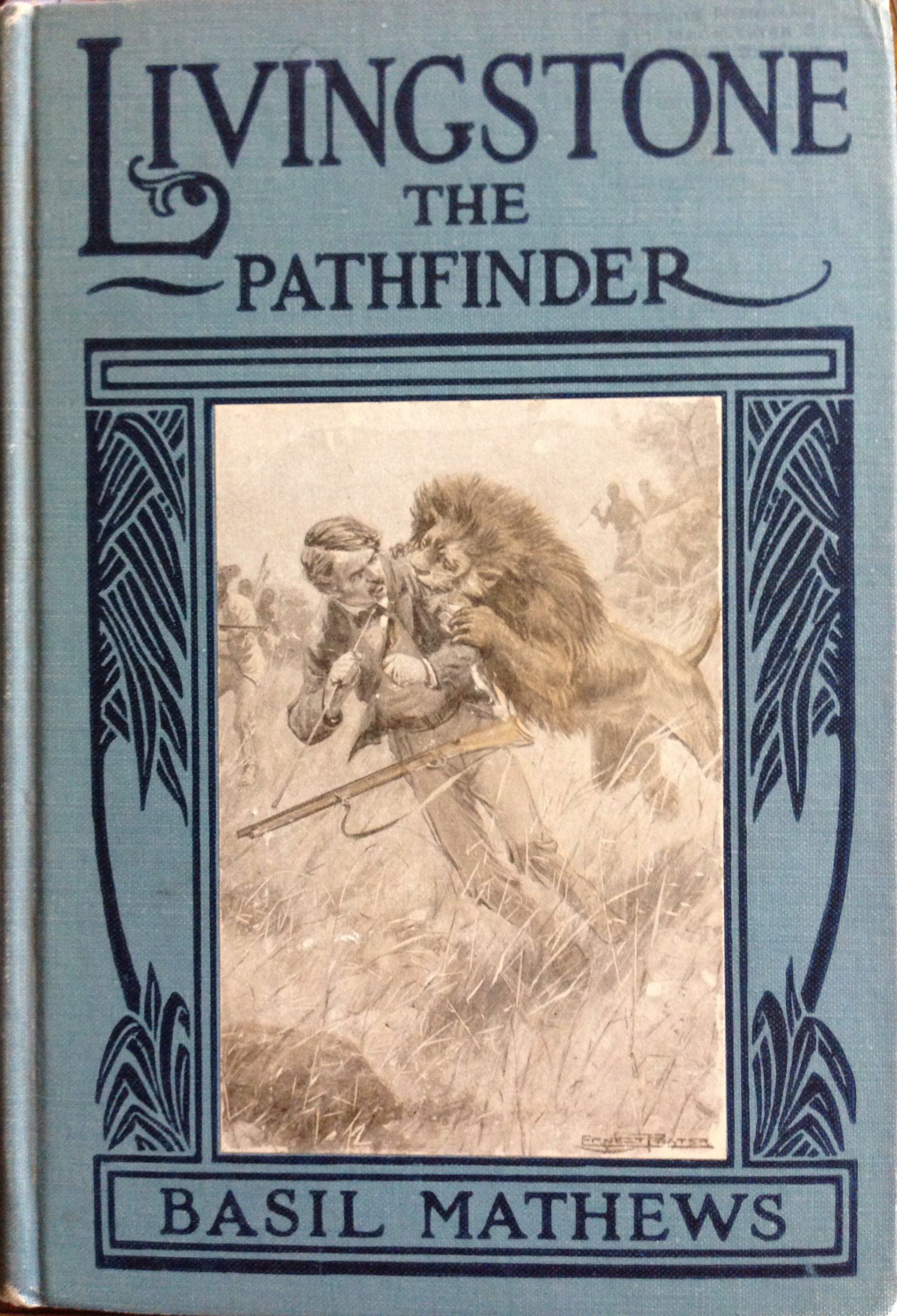
“‘It is impossible,’ replied the Portuguese and the natives, explaining that the river was choked with duckweed and that the natives would shoot them with poisoned arrows. Livingstone, however, spent his whole life doing things that men said were impossible...”
~David Livingstone: The Pathfinder by Basil Matthews1
What praise to be given! Missionary Dr. David Livingstone really did spend his life doing what men said was impossible. Who would think it possible for a young boy working in a cotton mill to one day be a doctor? Who would think it possible for that same Scottish lad to one day traverse the African wilds - not to mention map the interior, survive danger and disease, discover water where there was thought to be dessert, and disciple tribes considered unredeemable? Who would imagine that one lone man could document the horrors of the African slave trade and wake up a sleeping world? By the end of his life in 1873, Livingstone surely had experienced the truth of Matthew 19:26, “With man this is impossible, but with God all things are possible.” (ESV)
For me, this was the theme of a biography of Livingstone that was originally written in 1912, David Livingstone: The Pathfinder. I remembered the book on our shelves when I discovered that this year is the 200th anniversary of his birth, and, in just a few pages, I was fascinated. Basil Matthews relates the story in a narrative tone that draws the reader in, gives useful background information, and makes Livingstone, along with his trials and triumphs, come alive. That’s a recipe for a great biography, I’d say.
Having finished the book, there are several points that stand out to me.
- As already mentioned, Livingstone dared to attempt the impossible. Sometimes he failed. Oftentimes, by God’s grace, he succeeded. How often are we kept from doing what God wants because others deem it impossible?
- He discovered the wonder of God’s creation. “...Livingstone enjoyed watching all the animals that roamed over the country, from the elephant and fierce black rhinoceros to the tiniest insects all happy at their work....Everywhere he found something to wonder over.”2
- He painstakingly documented his findings to make them useful to others, showing that his vision went beyond himself.
- He didn’t give up even when he faced deep pain. Like many missionaries, Livingstone faced intense loneliness, the death of loved ones such as his wife Mary, the disappointment of false friends, and disease that nearly crippled him. He knew what it was to suffer. Yet his God-given mission(s) drove him on, and he finished the race because his hope was in God.
I hope today’s missionaries get to spend significant time studying biographies of yesterday’s missionaries because they give us such perspective. On one hand, we might realize that our struggles are not so hard to bear after all. Or perhaps we will be comforted by increased knowledge of the “cloud of witnesses” (Hebrews 12:1) and by seeing how God has upheld others in His “righteous right hand” (Isaiah 41:10).
___________________
1 Matthews, Basil: David Livingstone: The Pathfinder (Pensecola: A Beka, 2000, originally 1912), pg. 117-118
2 Ibid., 106
Thursday, August 29, 2013
The Mission Field Under Our Noses
Seven children from the same family were being baptized. One by one they shared their testimonies. After the oldest, all the rest sounded quite similar. Part of each sound snippet included something like, “I saw my sister become a Christian, and I wanted to be a Christian, too.”
As I listened, I realized what an impact this eldest girl had had on her family. Clearly, salvation is the work of the Holy Spirit (Ephesians 2:1-9 and Philippians 2:13) and our understanding of it shouldn’t be based solely on wanting what someone else has or a sentimental idea of being like “Big Sister”. That is definitely something to be careful of, but the main thought that struck me at the time was how precious this scene was. It pressed the question, “Is each of us living in such a way as a sister that our younger siblings (or anyone else) would say, “Wow! If that’s Christianity. I want in.”
Such a thought leads, of course, to a personal evaluation of ourselves before the Lord compared to Christ and His Word. However, my main point goes more with the sister part of the revelation. God used one girl (at least in part) to bring six souls to Him - six souls right under her nose. Did this girl ever think these siblings were her mission field?
As a girl who has lived seven years of her life overseas doing “foreign missions work” with her family - and loving much of it, I might add - I’ve realized that I often used to think that real missionary endeavors only happen in faraway places. As I’ve grown up and talked with friends, I think this is actually a rather common idea.
And let’s face it, it’s comfortable to think that way. If we can’t do “that sort of thing” right where we are, we’re off the hook! Furthermore, I’ll be the first to admit, that it would be much cooler to go around telling people that I’m doing such-and-such in a tropical country with people who are desperately poor (Note: There are people who are desperately rich in most third-world countries, too.) than it would be to say that I’m teaching a four-year-old to read, helping Grandma shop for groceries, learning from Mom as she teaches Josie how to cook, trying to be a good example of Biblical womanhood for my little sisters and encouraging my five-year-old brother to be a godly man by going on adventures of discovery and dominion in the woods behind my house all while keeping up with the dishes, laundry and the gardens so that our house can be at least a little ready for surprise guests - all those “strangers” we’re supposed to welcome.
But, truly, when we look at what real missions work is...
- presenting the message of salvation and teaching others to follow all of Christ’s commands (Matthew 28:19-20),
- living in such a way that our God-directed works and our Christ-sourced love make a watching world wonder (Matthew 5:16 and John 13:35)
- making the most of every opportunity (Ephesians 5:16 and Colossians 4:5)
- and caring for “the least of these” (Matthew 25)
...are these “little things” not just as important on the homefront of suburban America as equivalent actions would be among unreached tribes along the Amazon? And, really, can anyone know how - or have the opportunity - to love your siblings better than you?
One of my favorite missionary stories is that of John G. Paton, Scottish missionary to the South Seas. While there are many gripping escapades in his adventures, two points still grip me five years after reading it. Firstly, before he set sail for the New Hebrides, Paton ministered among his own Scotsmen who happened to be in just as much need of God’s Word as the cannibals among whom he would later live. He was a missionary right where he was. Later, he realized that this time prepared him for the overseas work. The chronicle of his adventure is bound up in Missionary Patriarch: The True Story of John G. Paton, written by John himself and edited by his brother James who was twenty years younger! If these two brothers, so far apart in years, had not combined forces the Church could have lost the story of one member of her “cloud of witnesses”. This may be reading between the lines, but in their massive literary joint effort, I think we can see that fruit of brothers who cared about each other deeply.
Another example that comes to mind is Rachel Saint. As her story is shared in Chapter 2 of “Saint: The Story of Nate Saint, Missionary Pilot”, we get to see that she took time to invest in her younger brother Nate’s life. She encouraged him to seek the Lord, and when Nate was in the hospital with osteomyelitis, Rachel talked with him about death and what it means for a Christian. All of this took place before he stood among the heroes of the faith, even while he was still a rambunctious boy. Have you ever wondered what God might have in store for your siblings and how He might want to use you to prepare them for it?
So, girls, while we do seek “all the nations”, let’s not forget the people right around us - the mission field under our noses.
Thursday, August 22, 2013
Review of Saved at Sea: A Lighthouse Story


Another wonderful book! Saved at Sea by Mrs. Walton is a sweet story about a young boy, Alick, and his grandfather who live with one other family on an island off the coast of England. Grandfather’s job is to care for the lighthouse and keep the lamps lit, with the help of Jem, the father of the other family. Alick tells of the misfortunes and blessings that come to that lonely little island when he was about twelve years old. The story starts, as they so often do when set near the sea, with a terrible storm and a shipwreck. Will his father ever return? Will someone try to take their little “sunbeam” away? And what ever does it mean to “build on the Rock?”
Saved at Sea is a somewhat unusual story because it lacks a human antagonist. That allows it to be a sweeter story than most since there are no nasty characters. However, because this book includes two instances of parents dying tragically, it might not be suitable for some children. It seems to have been written for children, though, because the message is clear, the wording relatively simple (without being boring to adults), and it is centered around a twelve-year-old. Besides that, it is quite short. I found it to be a very quick read because the plot and the short chapters encouraged me to “read just one more!” The next time I want a cheery little story I think I will probably return to Saved at Sea.
Title: Saved at Sea: A Lighthouse Story
Author: Mrs. O.F. Walton
Setting: England
Main Character: Alick Fergusson
First Printed: 1879
This Printing: 2007
Pub: Lamplighter Publishing
Series: Rare Collector’s Series
ISBN: 1-58474-131-7
Chapters: 12
Pages: 119
Pages/Chapter: ~ 10
Additional Stories: None
Saturday, July 20, 2013
Review of Jack the Conqueror

This sharp looking little book from the Lamplighter Collection ranks among my favorites. It is short, sweet and deals with real-life problems in real-life ways. It does tend to take a “God helps those who help themselves” angle, so remember that that idea is not really the whole picture.
Nevertheless, just as Nehemiah had to physically rebuild the wall around Jerusalem, Jack has to conquer his problems in practical ways. You see, our ten-year-old hero lives with his aunt who is poor and doesn’t care what he does or where he goes so long as he doesn’t cost her anything. He can wander around town, climb trees, run in the fields, and be as dirty as he likes all day long. But his clothes are very ragged, he doesn’t get much to eat, and he has no one to teach him. So, Jack, after finding out that this is not good, must “resolve well and persevere” alone.
He’s not truly alone for long though. His willingness to try things soon wins him friends. With their help and Providence, Jack not only learns to be clean, work diligently, and read but more also. It really is fun to read about his adventures! Perhaps one of the best parts is how he manages to have his one and only set of clothes mended! His patience and diligence and the kind wisdom of his friends form an impressive model for children and adults to keep in mind as they conquer their own challenges.
Title: Jack the Conqueror
Author: Mrs. C.E. Bowen
Setting: Bushgrove, England
Main Character: Jack Harold
First Printed: 1869
This Printing: September 2011
Publisher: Lamplighter Publishing
ISBN: 1-58474-187-2
ISBN13: 978-1-58474-187-9
Chapters: 15
Pages: 127
Pages/Chapter: ~ 8
Wednesday, July 17, 2013
Review of Jessica’s First Prayer

To continue with our series on missions, here is a review of a book that I think presents a poignant picture of biblical missionary activity. Even though the story is set in nineteenth-century London, the principals hold true today. The following thoughts are taken from my “Book Journal”.
Yesterday, I started reading one of Lamplighter’s books that came in the mail with our September package. Today I finished it! Yes, Jessica’s First Prayer by Hesba Stretton is a small book (less than 100 pages), but it also is such a sweet story that this afternoon I had to get to the end.
Little large-eyed Jessica has no one who cares for her in all of London until one day
when a grave man begrudgingly gives her a
cup of coffee from his stand. Her friendship will then lead her to a church where her bare feet are eventually led not only down to the pulpit but also down the Way of her Savior. Jessica’s sweet confidence that the Lord will hear her prayers “for Jesus’ sake” transforms the heart of her friend.
Firstly, I like how Hesba Stretton deals with the hard reality of mid-nineteenth century London life yet still keeps the story sweet. I would feel all right reading this story to an eight-year-old. Secondly, I love the minister. He is so gentle and kind to his two daughters and to Jessica. Most importantly, he sees beyond Jessica’s raggedness - he sees her as one of Christ’s lambs to be fed. Also, he actively seeks to help her not only by explaining God’s truth, but also helping to meet her physical needs. He is a good example for me in all these ways and seemed like a minister I would like to know.
Lastly, on a more technical note, I love how Lamplighter has put in footnotes for the Scripture references. It is so nice to be able to see what passage is being referred to, and I am really trying to pay attention since one of my goals is to memorize more verses!
Subscribe to:
Comments (Atom)